1967 /
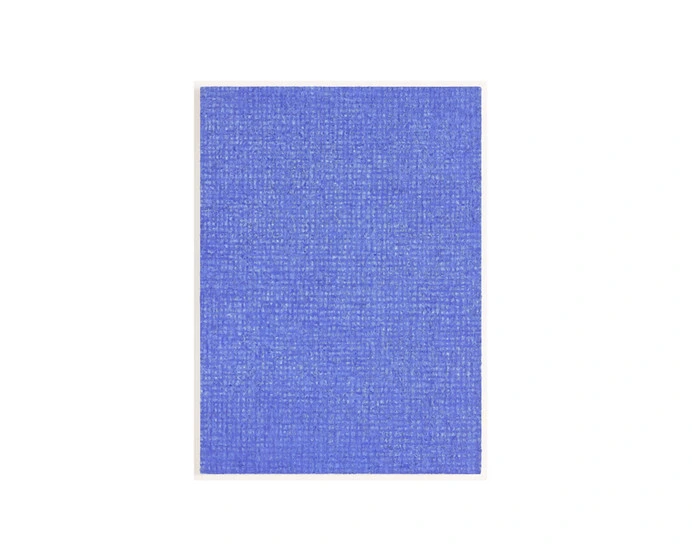
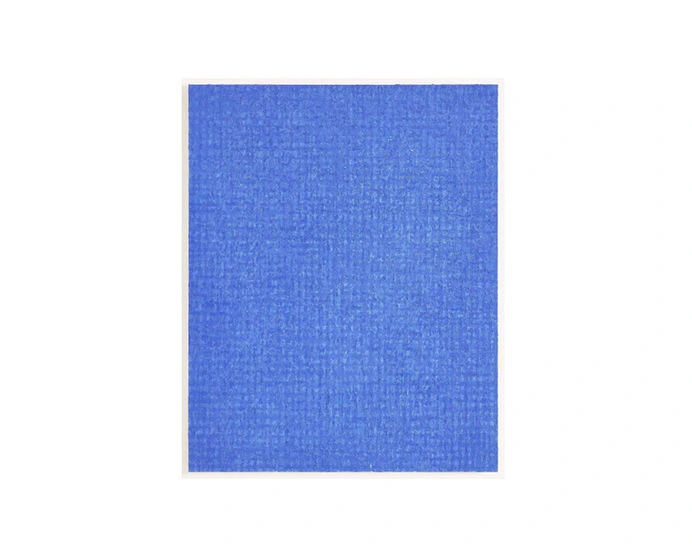
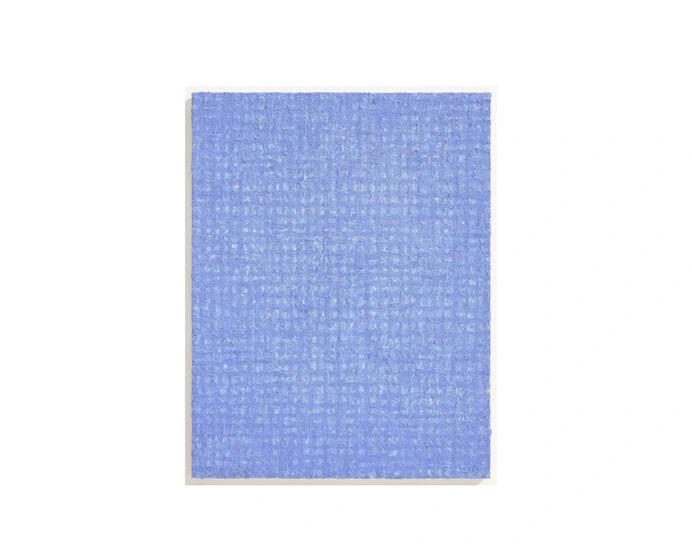
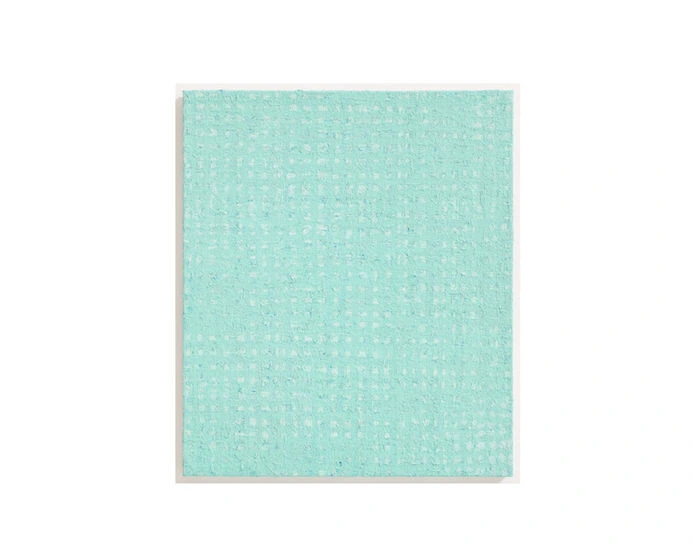
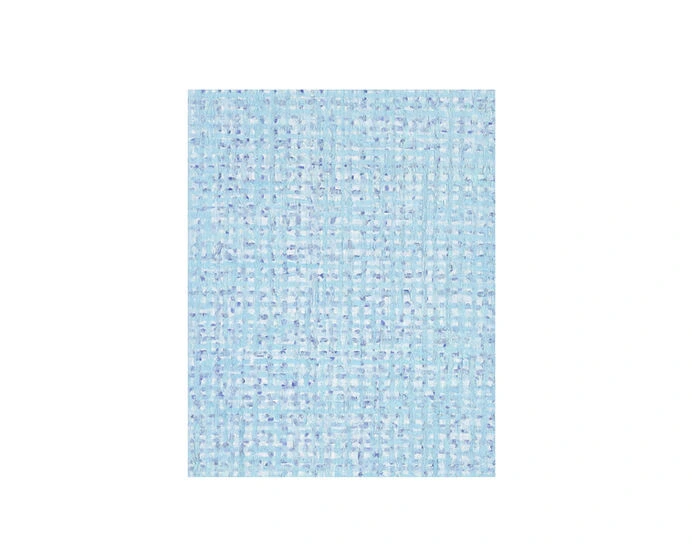
Shin's canvases are repeatedly stroked with small brushstrokes of No. 2, No. 4, No. 8, etc. A stroke is nothing more than a segment of time. The amount of paint used in a single stroke and the time it takes for the paint to dry is the amount of time on the canvas. Slow-drying oil paints contain more time than fast-drying acrylics. When one layer is finished, I brush a new layer on top of it when the paint is about 80% dry. In some places on the canvas, the layer of time that is the past, the wiggly, undried past, pushes up against the layer of time that is the present. What emerges is an inhomogeneous screen, with layers of time mixed together: time that has completely dried into the past, time that is progressing into the present on top of it, and time that has not completely closed into the past and is pushing through into the present. Up to this point, the brushstroke is an act of place and time.
But the brushstrokes are ultimately a gesture to open something up. As the vertical and horizontal brushstrokes and layers of tediously simple repetitive motions are applied, the inhomogeneous screen gradually calls to a homogeneous screen. At some point, the critical point of the composition comes, and the space opens up. It is the moment when the canvas embraces space as architecture embraces space. This is the moment of great realization in Shin's painting.
Photographer Dr. Hiroshi Sugimoto pulled his lens past infinity in order to capture spaces in his architectural photographs that were impossible to capture with a camera. The focus pierced the infinite and moved infinitely forward. When the focus reached the world of perception beyond the vanishing point, the screen of perception became dull.
Whereas Sugimoto sought to reach space by pulling his lens to infinity and beyond, Shin sought to reveal space by sweeping it with repetitive, routine brushstrokes. As a result, Shin's paintings reach a state of extreme stillness. Painting is an empty business. If futility is the true spirit, I wonder if a dazed or bland state can be the best state.
The infinite repetition of short strokes is more an act of reception than a will to form for the sake of form. The painter's brush is a half-body. The body is composed of a metaphysical body and a physical body. The brush can be a god or a body. However, the brush that physically rests on the screen is the brush of the body. The brush of the body can never reach space, so the brush of the body must be neutralized, leaving only the brush of God. The brushstrokes of the sieve for this purpose should be meaningless, simple, and repetitive. Just like Shin's short strokes of vertical and horizontal brushstrokes. The calligraphic scene becomes more and more bland.
We are tardy. Watching time pile up on a blue screen and places fade away.
And then we recognize. The world of infinite space on the screen, guided by the invisible brush of God. A world that is deep and manifest.
<An excerpt from the review of A Stroke of Infinite Repetition for a Critical Point , Huang Yin
Website
https://www.artprojectco.com/portfolio/shin-soo-hyeok